When the Wall Itself Stays Wet
For Basement Walls That Won’t Dry Out
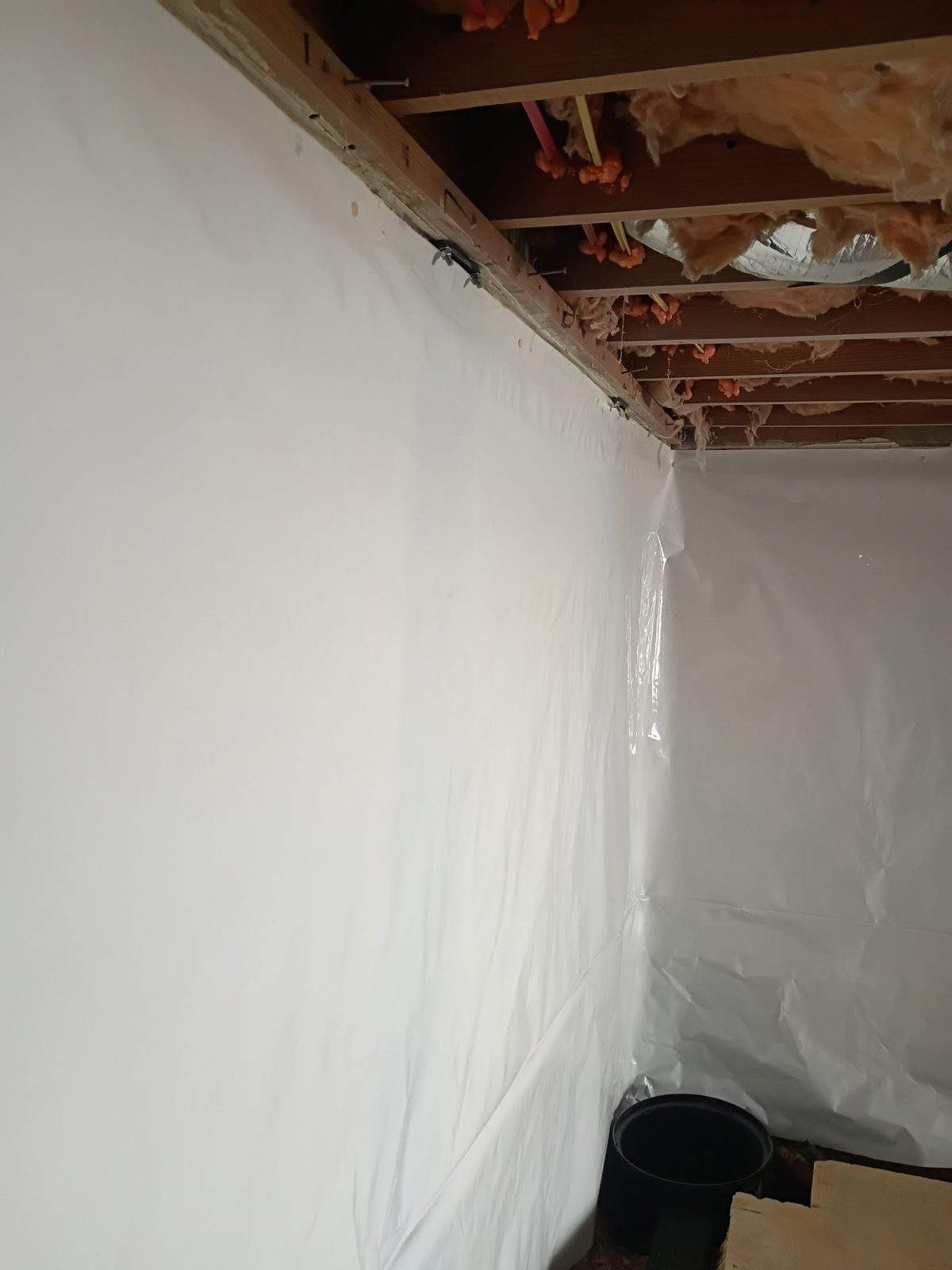
Wet walls, chalky white stains, paint that bubbles and peels every spring? When water is showing up on the wall itself, sealing over it won’t last. A drainage mat gives the water a path down to the drain and out, which helps prevent wet walls and peeling finishes.
The Basement Medic Difference
Why Homeowners Call Basement Medic
Scoped to Your Basement
Some basements need the drain on two walls, some on all four. The inspection sets the scope, not a package.
We're Not Tied to One Product
We choose the materials that fit your wall, not one patented panel we have to sell on every job.
We Give the Water Somewhere to Go
Wall work needs an exit. Ours ties into the perimeter drain and pump, which carry the water out of the basement.
We Handle the Damp Air, Too
Seepage is only half of it. We can add a vapor barrier and dehumidifier to help with the heavy humidity block walls give off.
The Coating Trap
Why Waterproof Paint Keeps Failing
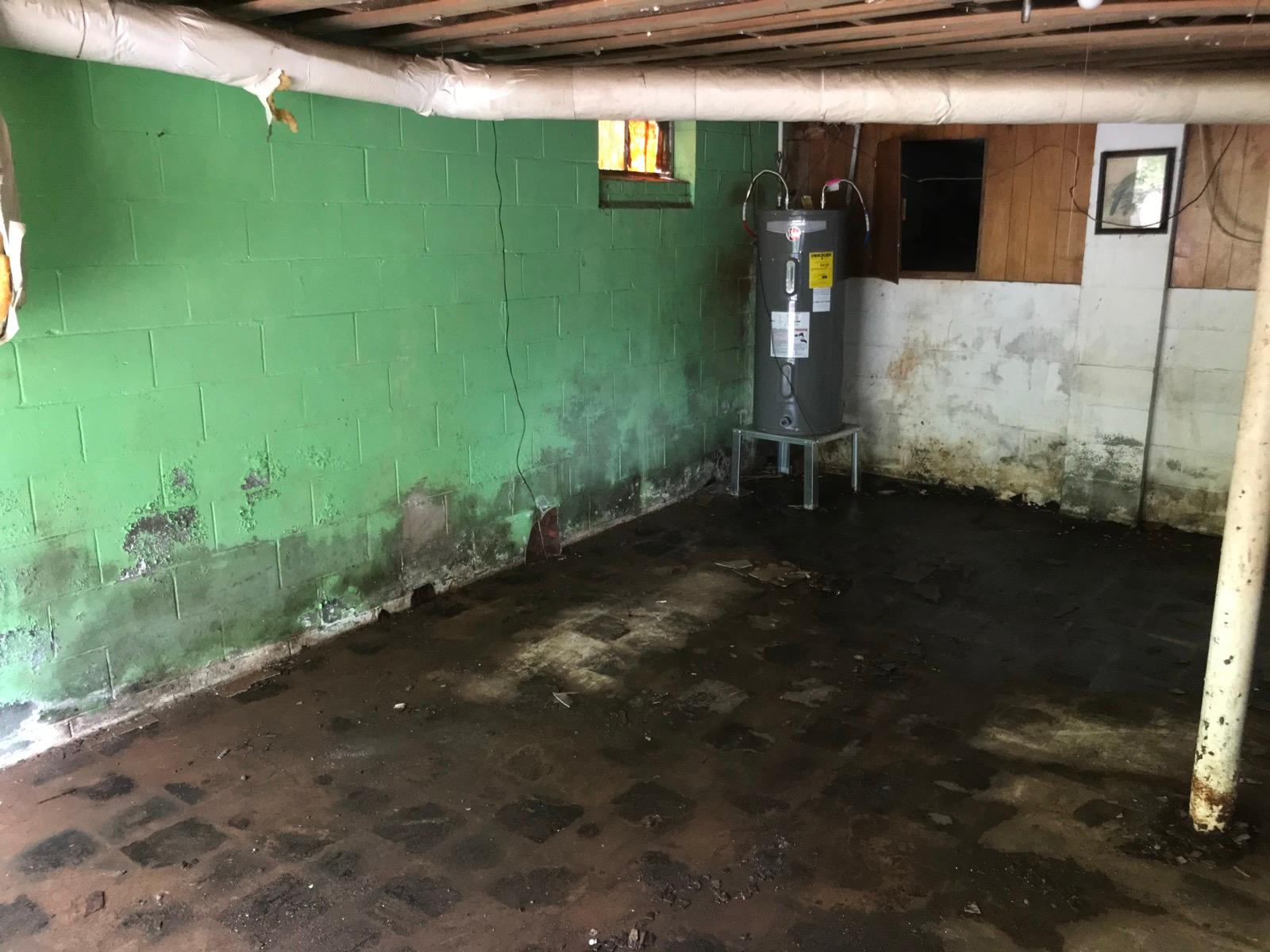
A lot of homeowners start by rolling a waterproof paint or masonry sealer onto the inside of the wall. For light surface dampness it can buy you a few months. A coating on the warm side of the wall is fighting the water pressure head-on, and the pressure wins every time. Water finds the next pinhole, lifts the coating, and you are back to a damp wall and a flaking paint job by the following spring. Real wall work handles the water before it reaches the face you can see. The coating, if you want one at all, is the last step — not the only step.
How We Treat the Wall
Give the Water a Path Down, Then Catch It
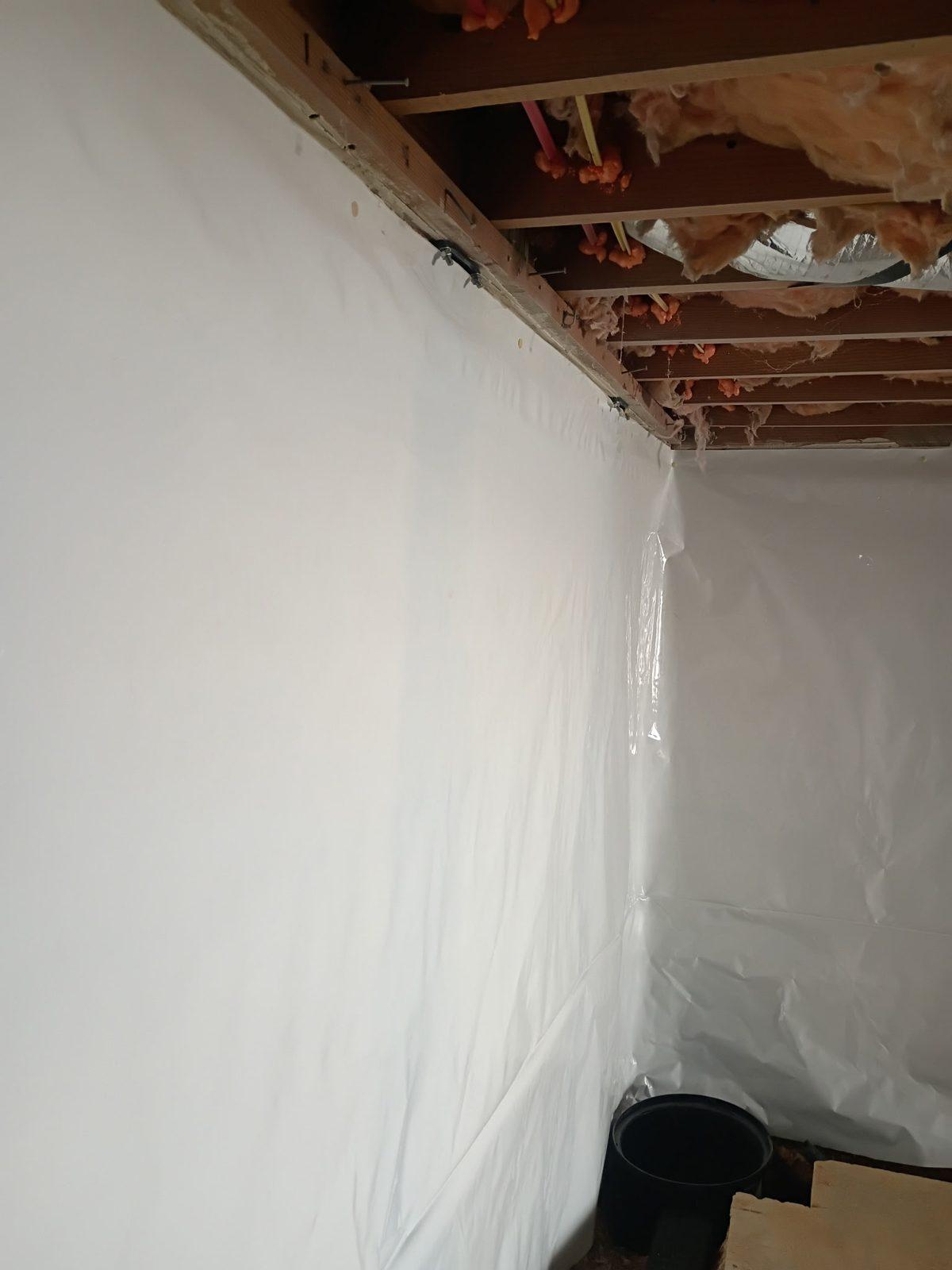
Where water comes through a block wall, a drainage mat on the inside face gives it a clean path down to the drain at the footer. The drain carries it to the sump, and the pump sends it outside.
1. Drainage mat up the wall
2. Weep holes in the bottom course
3. Down to the drain and out
4. Finish and protect
Why the Wall Weeps
Block Walls Wick Water Like a Sponge
A basement has two different water problems, and they need two different answers. One is water rising at the floor, which is the drain’s job. The other is water entering through the wall face above the floor. That is wall waterproofing, and it is the lane this page covers.
A standard 8-inch concrete block is roughly half hollow core, and those cores fill and hold a column of water against the wall. Run a hand across the block after a wet week and you feel it cold and damp, with the chalky white efflorescence flaking off under your fingers. The block soaks up groundwater and pulls it through, which is why the paint bubbles, the iridescent water lines show, and the lower 2 to 3 feet of wall stays dark hours after the rain stops. On a walk-out lot where the exterior grade sits 4 or 5 feet above the basement floor the soil presses water against the upper wall and it seeps in well above any floor drain.
This is the wall-face problem. The footer and floor side is handled by full basement waterproofing, and an active crack is its own fix — wall crack repair. Most jobs need more than one, and they go in together.
Basement Wall Waterproofing FAQ
Questions Homeowners Ask
What is the difference between basement waterproofing and basement wall waterproofing?
Basement waterproofing is the whole interior solution — the perimeter drain at the footer, the sump, and the moisture control. Wall waterproofing is the part that handles water coming through the wall face above the floor, using a drainage mat and weep holes that feed that same drain. Most jobs need both, and they go in together.
What is the white powder on my basement wall?
That is efflorescence — mineral salts left behind as water moves through the block and evaporates. It is a sign water is wicking through the wall, not just sitting on the surface. A coating over it will not last. The water needs a path down to the drain.
Can you waterproof a finished basement wall without tearing everything out?
It depends on where the water enters and how the wall is finished. We diagnose it on a free inspection and tell you straight what has to come off and what can stay. Every basement is different.
Make the Wall Drain, Not Bubble
A free Basement Medic inspection finds exactly where the wall is letting water in and what it takes to channel it out.