A Straight Answer, Free Inspection
Basement Wall Crack Repair, Diagnosed Honestly
Noticed a crack in your basement wall? Some are harmless settling. Others mean the wall is moving and water is on the way in. We come take a look, tell you which one you have, and only recommend a repair if you actually need one, and we match the fix to what your wall is actually doing. Free inspection, straight answer.
The Basement Medic Difference
Why Homeowners Call Basement Medic
We Diagnose Before We Quote
Not every crack needs a repair. We tell you whether yours is serious, just settling, or purely cosmetic, and walk you through the simple field test before quoting anything.
We Don't Cut Corners on the Install
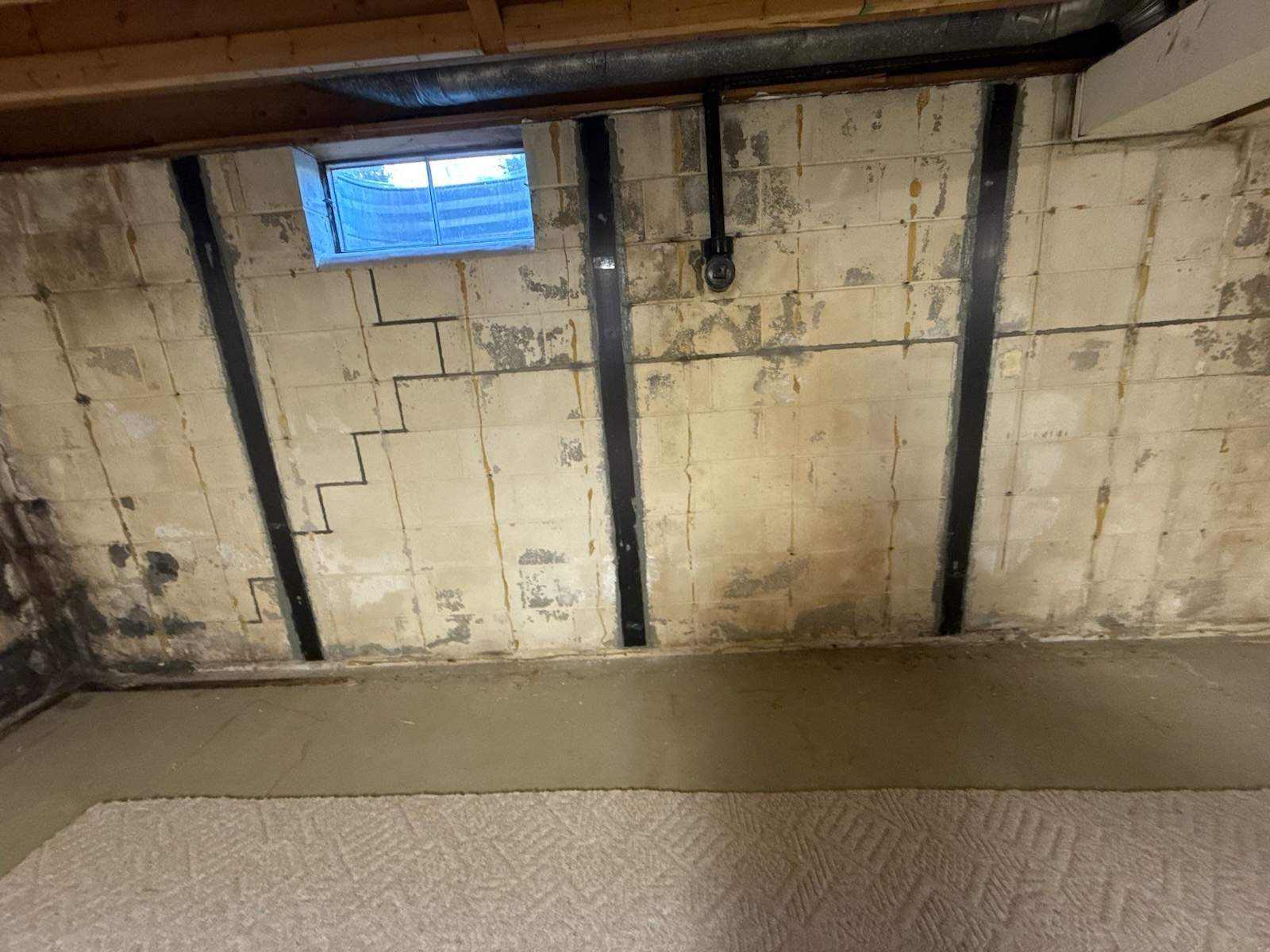
A wall repair only holds if the prep is right. We sand the surface smooth and fill the cracks before we install anything, because the detail in the install decides how well the repair holds.
We Match the Fix to Your Wall
Some walls need straps, some need bracing, some just need a sealed crack. We use what your wall actually needs, not what's already on the truck.
We'll Tell You When It's Not Our Job
If your wall truly needs deep foundation work, we say so straight and point you to the right specialist. We don't take on a job we're not the right crew for.
Know Your Crack
Structural or Cosmetic? It Depends on the Direction
Most homeowners find a crack one of two ways. They spot it, or they find water tracking through it after a storm. Cracks and water travel together, so a leak is often what sends someone looking at the wall in the first place. Press a palm to the block along a fresh crack after a wet night and it reads cold and damp where the water has been moving.
Stair-step cracks
Horizontal cracks
A Simple Field Test
How to Know If a Crack Is Getting Worse
For a stair-step crack you are unsure about, there is an honest, low-cost way to find out before you spend a dollar on repair.
We would rather you do that than sell you a repair the wall does not need. A rough rule of thumb: separations under a quarter inch are usually less urgent, wider than a quarter inch is more concerning, and any horizontal crack is worth a look no matter the width.
Mark the crack.
A bead of construction adhesive across it works fine.
Watch it for 4 to 6 weeks.
Read the result.
If it widens, the movement is active and the wall needs attention. If it holds, it was likely a one-time settle and you can leave it alone.
The Repair
The Right Method for the Wall in Front of Us
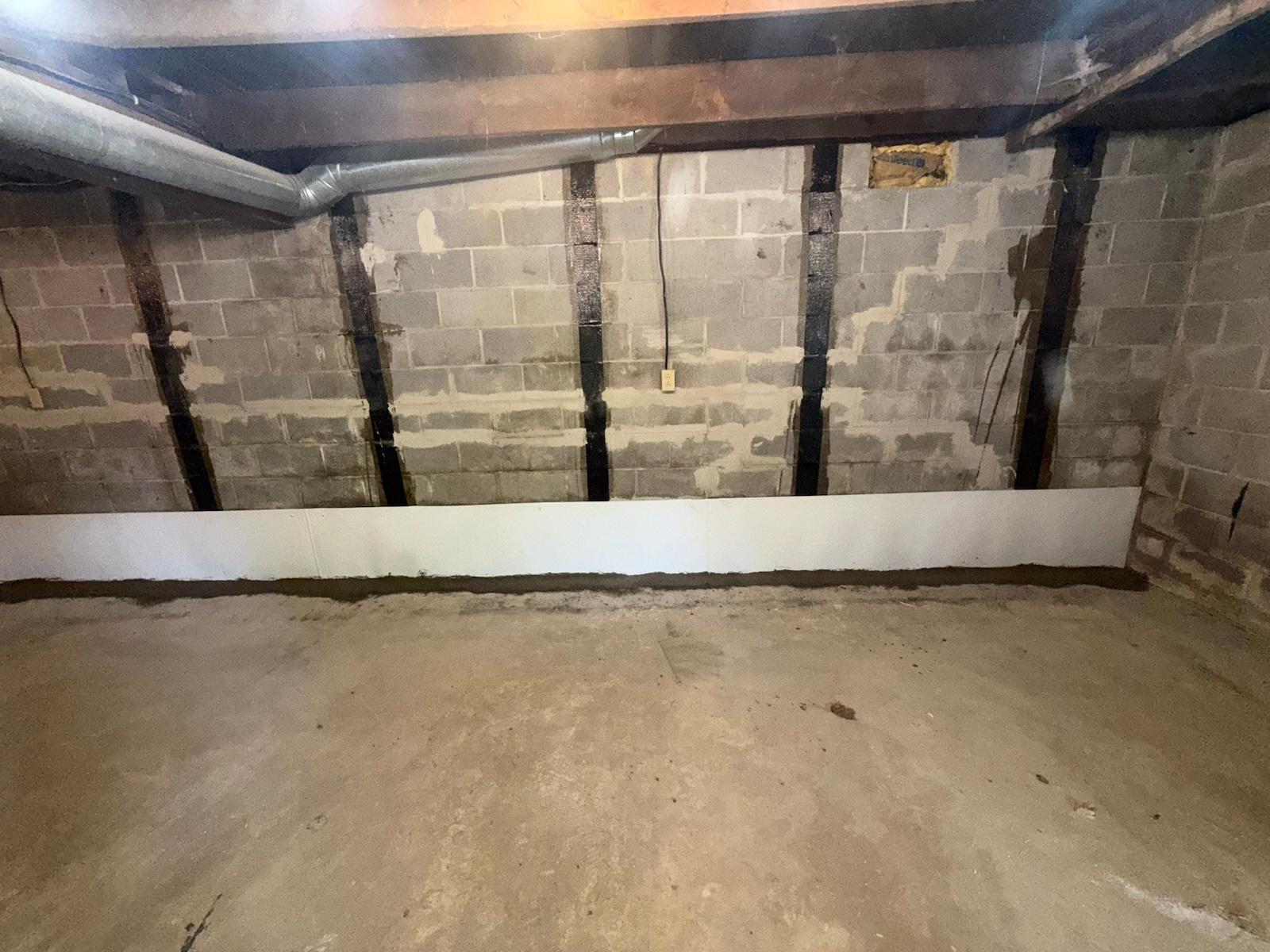
The part that separates a lasting repair from a failing one is prep. Carbon-fiber straps only hold if the wall is sanded down, the cracks are filled with concrete to a smooth, sound surface, and the epoxy is applied right. Straps thrown over a rough wall with one quick coat let go inside a year. The prep is where the quality lives.
Carbon-fiber straps
Steel I-beam / wall braces
Epoxy / polyurethane injection
Honest Limits
When It’s Not a Basement Medic Job
We reinforce and seal walls from the inside. The deep-foundation leveling work some companies pitch for a progressive settlement problem is not what we do:
- Helical piers
- Push piles
- Underpinning
Most walls do not need it. If yours genuinely does, we will tell you straight so you can bring in the right specialist instead of selling you something outside our lane.
Basement Wall Crack Repair FAQ
Questions Homeowners Ask
How much does basement wall crack repair cost?
Wall crack repair and reinforcement generally runs $3,000 to $15,000, driven mostly by how many carbon-fiber straps or braces the wall needs. Straps run roughly $750 each installed. A single crack injection is a smaller job. A full bowing wall with straps across it is a larger one. We count the wall and price it after a free inspection. No guessing, no sticker price.
Is a stair-step crack in my basement wall serious?
Usually it is a settlement crack, and on a newer home it can be normal settling. The way to know is to mark it and watch it for 4 to 6 weeks. If it widens, it is active and needs attention. If it holds, it is likely a one-time settle. A horizontal crack is different and is always worth a look.
Do carbon-fiber straps really work on a bowing wall?
Yes, when the wall is prepped right. They bond to the block and are designed to stop further inward movement, spaced about every three feet. The usual failure point is not the strap. It is a wall that wasn't sanded, filled, and cleaned before the strap went on.
Do you do foundation piers if my wall is moving?
No. We reinforce and seal from the inside with straps, braces, and injection. We do not do piers or underpinning. If a wall truly needs deep-foundation work, we will tell you so you can call the right specialist.
Find Out What Your Wall Crack Actually Needs
A free Basement Medic inspection tells you whether a crack is structural, cosmetic, or just settling, and exactly what it takes to fix it.