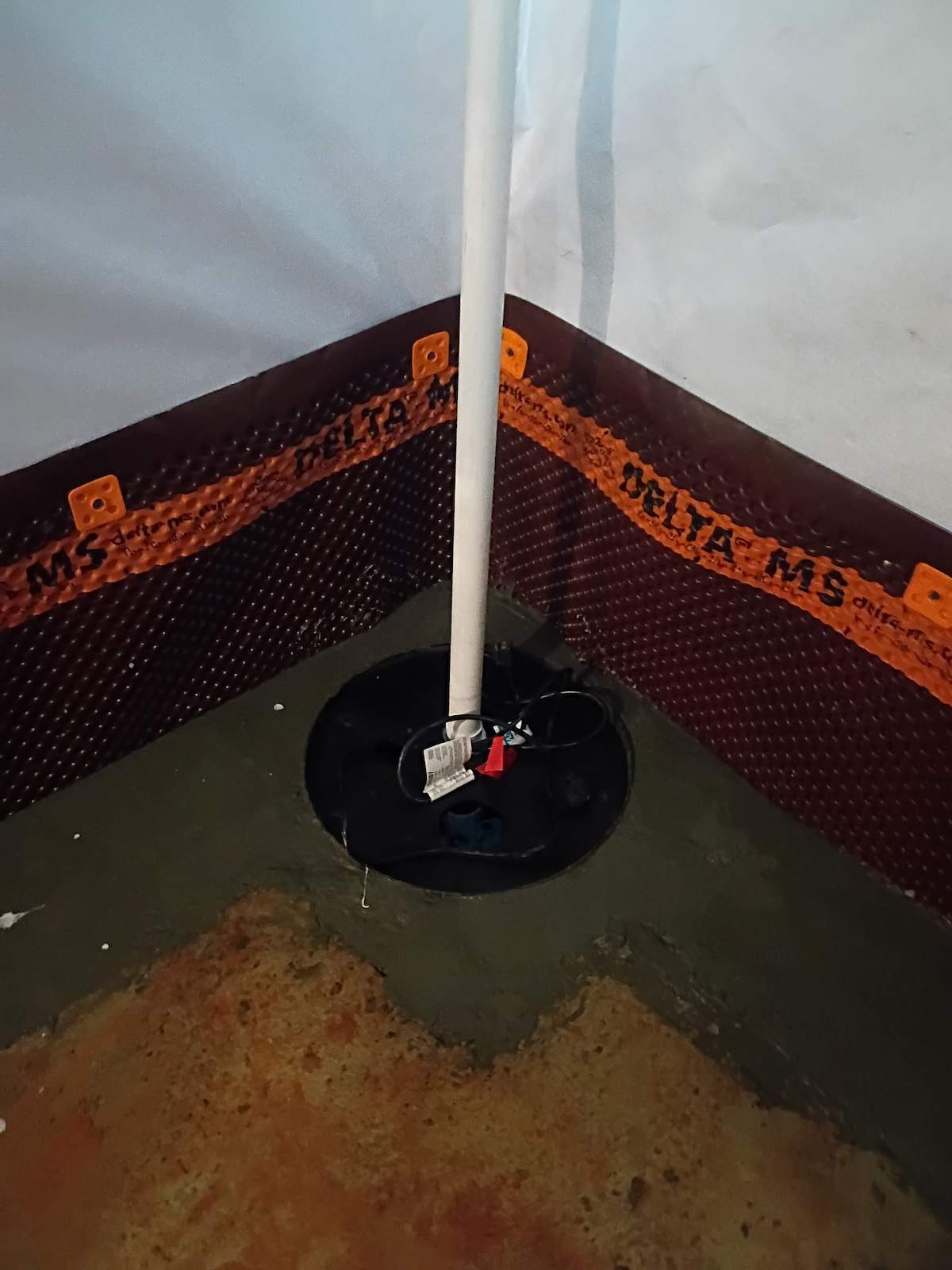
The Pump That Empties the Basement
Sump Pumps, Sized and Set to Actually Keep Up
Pump that runs nonstop? Can’t keep up during a storm? Or no pump at all, and the floor keeps getting wet? You need one that’s sized right for your basement. We install commercial-grade pumps with battery backup, built to keep the system running when the storm knocks the power out, which is when you need it most.
The Basement Medic Difference
Why Homeowners Call Basement Medic
A Pump Built to Last
Not a hardware-store special. We install a pump built to run hard through the worst storms, and we pick the right one for your basement instead of selling the same model on every job.
Sized to Your Basement
We size the pump to how much water your basement actually moves, not a guess. The wrong size is the most common reason a pump can't keep up.
We Make Sure the Water Can Reach It
A pump only works if the water has a path to it. If you need a drain to feed it, we install that too, so the whole system actually works.
Backup Power for When It Matters
Storms knock out the power right when the water peaks. We add a battery backup where an outage would mean real damage, and skip it where it isn't worth the cost.
When the Pump Is the Problem
Signs Your Sump Pump Is Failing
A sump pump has one job, and when it stops the basement floods. Watch for these:
- Water building up in the pit while the pump sits there and never runs.
- The basement floods in a storm but the pump never kicks on — sometimes a tripped breaker, sometimes a burned-out motor.
- The pump runs constantly and never shuts off, a sign something has malfunctioned — you hear it cycling at 2 a.m. and it never quiets down.
- Water cresting the rim of the pit during a heavy rain.
- There’s a sneakier failure, too: A pump can run perfectly and the basement can still flood, because the water enters on the far side of the room and has no way to reach the pit. That is not a pump problem — it is a drainage problem. The pump can only move the water the drain delivers to it, which is exactly why we install the two together.
The Right Pump for the Basement
We Size the Pump to the Water, Not Off a Shelf
We install commercial-grade submersible pumps and size them to the basement — and we are product-agnostic, so we source the right pump for your home rather than the one tied to a patented system. For most average homes with up to about 150 feet of trenching, a one-third horsepower pump handles the load. When more water is coming in, or there is more drain to feed it, we step up to a one-half horsepower pump. The pump sits in a pit set roughly three feet below the floor, so it has room to gather water before it lifts it out through the discharge line.
Size matters because an undersized pump runs constantly and burns out inside a few wet seasons, and an oversized one short-cycles and wears its switch early. We match the pump to the drain length and the water you actually get through a peak July or August storm, not to whatever is on the truck.
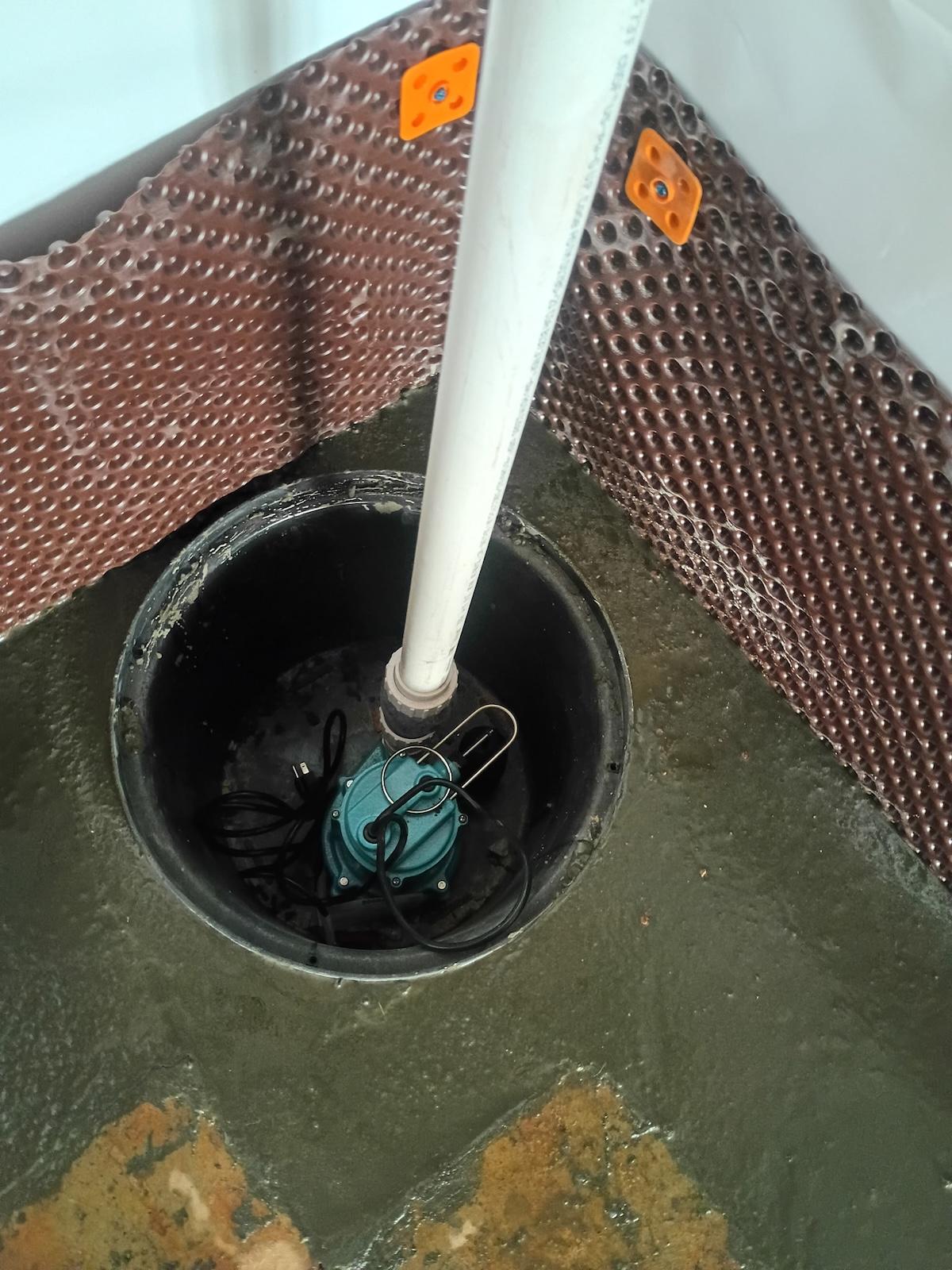
For the Worst Storms
Battery Backup, Because the Power Goes When the Rain Comes
The worst water intrusion arrives in the biggest storms — and that is exactly when the power is most likely to drop. A standard pump is dead weight during an outage. A battery backup is there to keep the pump running when the house loses power, when the main pump is overwhelmed, or when you are out of town and a line of storms rolls through overnight.
We recommend backup for finished basements and for homes without a whole-home generator, where a single failed pump during a storm means real damage and that swampy, waterlogged smell for weeks after. For an unfinished utility basement with low stakes, it may not be necessary, and we will tell you that rather than upsell you. We can add a water alarm so you hear about a problem before it spreads across the floor.
Sump Pump FAQ
Questions Homeowners Ask
How much does a sump pump cost?
A sump pump installed runs roughly $750 to $2,000, depending on the pump, the pit, and whether you add a battery backup. That is the pump on its own. When it is part of a full interior drain solution, it is priced together with the drain, because the two run as one solution. We give you the real number after a free inspection.
My sump pump runs but the basement still floods. Why?
Usually because the water is entering somewhere the pump can't reach. A pump only moves the water that gets to the pit. If the floor floods on the far side of the room, there is no drain carrying that water to the pump. The fix is an interior perimeter drain feeding the pit.
Do I need a battery backup sump pump?
If you have a finished basement or no whole-home generator, yes — the biggest storms bring both the most water and the highest chance of a power outage. For a low-stakes unfinished basement, it may not be worth it. We tell you straight which situation you're in.
What size sump pump do I need?
For most homes with up to about 150 feet of drain, a one-third horsepower commercial-grade pump handles it. More water or more drain calls for a one-half horsepower. We size it to your basement on the inspection.
Make Sure the Pump Can Keep Up
A free Basement Medic inspection checks your pump, your pit, and your drainage, and tells you what it takes to help prevent a flooded floor in the next big storm.